Sunday, May 22, 2016

X-Men: Apocalypse: An Unofficial Review


Good evening to all innocent bystanders and followers of this X-Men blog. I've just come back from the cinema an hour ago, and I had panicked because I seem to have dropped my ovaries somewhere in the theater. It proved difficult to hold onto the rest of my womanhood while I got home. It was as if my entire reproductive system was dissolved into sand by goddamn Apocalypse himself. There are so many things I enjoyed about this third installment of the First Class arc, and the ninth one for the overall X-Men films. It was MILES AWAY from being nearly as emotionally resonant as X-Men: First Class or as well-coordinated like X-Men: Days of Future Past, but it was FUN. I can't really complain much, in spite of the mixed reviews from critics, because it's really the SMALLEST MOMENTS OF CHARACTERIZATIONS that got to me. This post will be incoherent in some places so please bear with me, okay?


Okay, first of all: CHARLES AND ERIK. Because, as I've stressed often in my X-Men reviews: ALL ROADS WILL ULTIMATELY LEAD TO CHERIK. If you don't know this about me, then rest assured that I will never get tired of saying it. Now, Cherik for this film didn't get to interact as much as they did in their first two films combined but there is DEFINITELY LOVE LOST between them. They had a bitter separation for 10 years before Days of Future Past, and now another ten before Apocalypse began. They both had female love interests. Erik had finally settled down with a wife and daughter, while his implied ex-girlfriend Raven tries to get him back to their side. Charles, on the other hand, wants to get it on with Moira. Personally, these developments were no threat to me as a shipper. Erik losing yet another loved one (in this case, both wife and child) was a way to solidify yet again that this man just can't have a happily-ever-after. Meanwhile, Charles suddenly having a romantic interest on Moira felt as rushed as I had counted on; they simply had no foundation to this relationship/attraction at all except for the scene at the beginning of XMFC where he flirted with her, and at the end of the film where he kissed her and erased her memories. 

I actually think it was a little unfair for both female love interests. Erik's got killed earlier on (and Raven was more or less there for him in a platonic, conciliatory manner, if anything); while Moira was there by default because she is one of Charles Xavier's in-comics lover. That said, when moments between Charles and Erik do happen, they feel very significant. Charles had forgiven Erik for what he had done during Days of Future Past and yet again affirms that there is light and goodness to Erik no matter how many times Erik himself invalidates it. Actors McAvoy and Fassbender did tone down the flirty, bromantic accept of their interpretation of the friendship shared by Charles and Erik, but the connection was still there; faint and struggling--but still just as monumental for both of their characters, even if it played little role over the course of the film's plot.

STILL, EVERY SCENE THAT CHARLES AND ERIK INTERACTED, THIS IS WHAT IS HAPPENING TO ME IN THE THEATER: 


The second thing I enjoyed was Sophie Turner as Jean Grey. I'm heavily biased because I love her so much as Sansa Stark in Game of Thrones. When it was first announced that she was casted as Jean Grey, I was so thrilled and ecstatic because it'd be a nice change to see her in another role, and playing such a pivotal character at that. She'd been great in this film but I know she could be better in the next films, if ever possible. I love her scenes most especially when she and Logan (Wolverine) first interacted. I love the moment of compassion that she allowed herself to grant Logan who is nothing but just a shell of murderous impulses at that point. She freed some parts of his overcrowded mind and may have given him a piece of his sanity back in doing so. Secondly, her role in defeating Apocalypse had shocked me because I still can't believe that I just saw her turn into THE PHOENIX in its closest incarnation on film yet! It was brief and definitely a fanservice moment to all comic book fans, but it was worth it. Seeing Sophie Turner in glorious flames like that just...it was just so breathtaking! I would want to have a next film just to see if they will re-do The Dark Phoenix Saga AND ACTUALLY DELIVER THE GOODS for real this time!


And can we please talk about how HOT OLIVIA MUNN WAS AS PSYLOCKE!? I don't think I could ever stop talking about it, actually. She looked tough, pristine and pure perfection! Her costume has got to be the closest comic-book faithful costume I have ever seen in the history of X-Men! Even Magneto's across the films doesn't look nearly as faithful to the comic book version as hers had been! As for her role in the film: Well, she was serviceable. Munn was photographic because she looked like an action figure who came to life, but other than a few awesome badass action scenes, she served primarily as a bruiser and didn't really have any real dynamic character development. I sure hope she would appear in the next film again. 

I was even talking to a friend that she could be a new Wolverine; the jaded outsider who isn't sure she could trust the Gifted School for Mutants, but decides to join them for a while to get a better read of the other mutants. Munn is certainly up to the task (the lady has action chops as much as she shines on the beauty department, mind you!). Storm--as usual--got the short end of the stick again. I don't understand why Storm doesn't translate well in film at all! She is a self-made goddess!! 

STOP STEPPING ON HER CHARACTER AND PLEASE WRITE HER TO HER FULLEST POTENTIAL, DAMMIT!! Stop understating her awesomeness, writers! I liked the actress they casted for the role, and I sure hope she will get her fair of screen time next time. Jubilee was a nice addition too, but THERE IS SO MUCH MORE TO DO WITH STORM, OKAY? STOP FUCKING NEGLECTING HER AND PUSHING HER TO THE SIDELINES ALL THE TIME! Make it rain with Ororo Munroe!


As for Apocalypse as a villain? I don't know. I didn't really care. He was an antediluvian, self-proclaimed divine being who wanted to remake the world to the image of mutants. I've read Age of Apocalypse. I've endured that clusterfuck divided into three (or four) collections last year, and though it was a little nineties for me (and not even in the best of ways), I did get an in-depth understanding of the character a lot more so than his condensed adaptation into this film. I don't know, guys. I wasn't that crazy about him unlike with the Sentinels. Yes, I am saying that killer robots were more definable than this film's version of Apocalypse. Another thing I wasn't happy about was Angel. A poor misuse of character, by the way. He's never gotten the fairest of treatment even in comics either. Too bad that didn't change here in this movie. Damn. But hey, more room for the other male heroes, I suppose. Scott (Cyclops) and Kurt (Nightcrawler) were fine as their own, but of course Evan Peters as Quicksilver really shone! MCU discarded his character in their Avengers film, but at least X-Men is making use of him here. He's such a refreshing comic relief and I'm absolutely glad he's around. This is the second Evan Peters performance that impressed me since his role in the fifth season of American Horror Story. KEEP IT UP, BRO! You're on my good side!~


So the rest of the film boiled down to CHARLES AND ERIK again. Seriously, what else do you expect me to talk about in this post? Look, like I said, I don't have a problem with Charles/Moira romance angle, but I hope they build on it in the next film some more because it's on the same level of that forced Steve/Sharon angle in Captain America: Civil War, although at least Charles and Moira did have enough scenes in First Class that make them more qualified than the former as far as romantic relationships go.

It was completely RIDICULOUS when we get a flashback of their interactions in XMFC WHICH DID NOT HAVE ANY KIND OF ROMANTIC TENSION WHATSOEVER AT ALL. I don't think half of the film-goers even fully recognized her until that sequence. She didn't have that much of a presence with Charles, mostly because X-MEN: FIRST CLASS WAS ALL ABOUT CHARLES AND ERIK'S RELATIONSHIP! Doing that flashback with Moira was just so FORCED AND MANIPULATIVE. Much like The Winter Soldier built more on Steve and Natasha's relationship, so did First Class with Charles and Erik. Moira was just a part of the cast. Hell, Raven and Erik would have a more believable romantic history because they did have enough chemistry and conflict on screen. I love Rose Byrne so I do want to see her again for the next film. But I do hope writers would stop shoehorning her relationship with Charles, and actually put some time and effort in letting it develop for the audience's benefit.

Now I bring up Charles/Moira again because we're talking about flashback. And ERIK GETS ONE ABOUT CHARLES! That entire sequence alone which included two of the most amazing shippy scenes from First Class was so poignant and masterful! Raven was the one who opened Erik's eyes to the mistake of his choice when he sided with Apocalypse. While in the midst of rebuilding the world as commanded by the bad guy, Erik gets an epiphany by remembering the moments (1) Charles had asked him to stay and become a part of something larger than himself, and (2) Charles proclaiming that there is more to Erik than pain and anger--there's also good and Charles feels it and wants to bring it forth no matter what. THAT FUCKING FLASHBACK, guys! I mean, it was like a shipper edited those scenes because it was definitely something I can expect watching from a fan-made Cherik music video (and I have made a shit-ton of those myself!). It was one of the two Cherik-centric scenes in the film AND IT WAS EPIC!


The second one was the final scene of them talking about the future of the X-Men. It was a nice moment between two good old friends; both finally giving way and compromising just a little not just for the sake of truce, but also because of mutual affection. Charles and Erik have been apart for two non-consecutive decades. The first decade was because of a bitter and resentful falling-out because of disagreements in ideals; the next was an unavoidable cool-off of sorts to pick up the pieces of their respective lives without each other. They have a complicated history, and it was never going to be easy, but at least for now they have learned to truly see things in each other's perspective. Erik agreed to take a step back from his hate-mongering and just trust Charles that he knows what he's doing with the mutant children in his care. Meanwhile, Charles admits for the first time that if anyone comes for his children, he will do whatever is necessary to protect them--even if it's through violence. Hearing Charles finally coming to terms that sometimes if the world pushes you, then you gotta push back, Erik is not just relieved but touched. Finally, his truest friend had become tougher and wiser, and no longer the same passive pacifist as he was in First Class.

I think Charles and Erik's relationship in Apocalypse is a step in the right direction. They are no longer embittered rivals, nor are they kindred souls desperate to impose on each other their conflicting beliefs. For once, they're just two men who had a history so intrinsically tied to one another, but chose to recognize that most of the time even though they can't sustain their connection, they can still find a way to remain diplomatic friends when all is said and done. Charles and Erik is a story about how much love and friendship can test us, and make us grow and change both in the best and worst ways possible. 

At this moment, I believe that both Charles and Erik had chosen to be at their best, and that's a piece of happiness I will cherish before the next trial and heartache for these two comes along.


Friday, May 20, 2016

Professor X and Magneto: A Personal Shipping Manifesto: PART I [AN OVERVIEW OF GENERAL SHIPPINESS]


The sappy, sentimental and dramatic piece of saccharine writing that you just read was the first draft of my Charles/Erik Shipping Manifesto which I started in Microsoft Word last year, but never got to continue because I was too busy reading and reviewing X-Men comics and some novels in between. Nevertheless, I decided that it's about time I write something extensive about Cherik's relationship because this whole sobriety thing isn't working out for me anymore. Essentially, what I I'm trying to say here is that shipping Charles Xavier and Erik Lehnsherr (a.k.a Professor X and Magneto) in all their known incarnations in comics, cartoons and film is my ULTIMATE VICE AND ADDICTION and--as much as it pains me to say this--it's been at least seven months and twenty-one days since my last indulgence (NOTE: I started writing this entry on January 21, 2016). Sobriety over not shipping these adorable fucks is pretty depressing, given the amount of fangasmic moments I usually experience whenever I discuss about this pairing at the height of my addiction (which spurted around mid-May 2014 right after watching X-Men: First Class for the second time with a friend). I've been bottling it all up inside in the last seven months because it is my utmost intention that I COMPLETELY BREAKDOWN by the time the next film of the franchise rolls around this year (X-Men: Apocalypse). I've so much love for Cherik pouring out of my pores that it's horrifying and disgustingly adhesive--as if I could just glue myself to this pairing forever. AND I CAN. Don't even challenge me, you naive, non-shipping reader who is probably creeped out by all of this.

Just looking back on the copious amounts of hours I spent Cherik-ing in social media is a pleasurable burn to my clitoris

Now that I have finished my 2015 X-Men Comics Diet, I can focus on writing the three essays I promised to deliver in the middle of 2016 and, understandably, the top of that list had to be this entry, and I'm going to take my sweet, sweet time writing this too, building up with the necessary and intense foreplay before rocking all your collective worlds with the uncomfortable penetrations that will ensue in all orifices available for Cherik you never asked to witness or read about. If you don't want to fall in the rabbit-hole of my seriously crippling obsession with Charles/Erik ship then I suggest you STOP READING NOW. It will get worse--infinitely more contrived, ramble-y and insane as this entry develops. If you still wish to venture on then--*soft chuckle with a Kubrick-esque smile plastered on my face* you...are...most...welcome.


WARNING: I shall be using various images about Cherik which will be composed of fan art and graphics that I did not make myself, and I may never get to credit them properly during the course of this manifesto. I apologize if you have seen your work used here without accreditation (mostly because they're images I saved and I don't even remember the places online I got them from). But please take comfort in the fact that I shall use your illustrations for the best of Cherikdom. Before we begin, here is the outline for the manifesto which I kept in a personalized Cherik journal (And yes, I own one):


Always go an extra mile of madness to express your obsession, folks!


--------:::::::::::::::--------:::::::::::::::--------


THE CARTOONS: Old Geezers and their issues

I continue writing this post in May this time (it's officially been ten months and 4 days since I last indulged in Cherik), so it's time to talk about my introduction to the X-Men which was the nineties cartoon series X-Men: The Animated Series. I had re-watched a few episodes from this childhood love of mine, and though it doesn't hold up nearly as amazingly as other superhero cartoon adaptations (hello, Batman: The Animated Series), there is still some understated charm and quirkiness to the kids' show itself that solidified a lot of my fan-favorite moments and character interpretations even to this day. Not all of them, of course. I used to have a crush on Gambit growing up (mostly because I've pretended to be Rogue as an eight-year-old girl; as well as Pink Power Ranger, but that's neither here or there). Now, I don't like Gambit. I just don't. Let's move on.

Ah, the nineties...
Xavier and Magnus (that's Magneto's canonical name--it was only later that it was changed to 'Erik') were leaders of opposing forces; Xavier with his X-Men, and Mags with his subtly deemed Brotherhood of Evil Mutants. Having different ideals and methods with no room for compromise is difficult enough, but having a history of friendship and bromance with your sworn enemy is another level of angst altogether. Their story pretty much follows the comics; the two gentlemen met at Israel where they worked in a clinic for Holocaust survivors. They instantly hit it off. Both Xavier and Mags would talk about hypothetical moral conundrums like, "Dude, what if a superpowered race of alternate humans become possible. How do you think normal folk would react and shit?", "Like, dude, they would totes turn on them superpowered people because humanity is all, like, envious and ignorant and shit", "Nah, dude. You need to see the best in people more", "No way, dude, humans suck. Gimme superpowered people any day, fo sho!".

Like, for real-reals, yo!

Disagreeing in this fundamental level caused some friction between the two, but they still continued on with their friendship because they're true comrades who intellectually intrigue and challenge each other. However, this was put to the test when one of the patients (Xavier was irresponsibly also dating) was kidnapped by a bunch of Nazi fuckers. Now Mags, being a Holocaust survivor himself, will not put up with that shit and so joins Xavier to rescue the girl. During a violent confrontation, both men reveal that they have superpowers to each other. This would have been a great moment when, once again, Xavier and Mags would become even closer than before now that they share yet another common factor, but Mags went all gung-ho and took it too far. He almost killed the Nazis. I personally don't see anything wrong with that, but self-righteous baby Xavier does not want blood on his hands at all, and stops Mags from his rampage. Mags wasn't happy about that, and the two parted ways in bitter terms.

But check 'em magnetic waves, ya'll

A personal favorite episode of most Cherik shippers in the cartoons was when the two dorks got trapped in Savage Land which was inhabited by prehistoric creatures like dinosaurs and wannabe Tarzans. It's a two-parter where neither men can use their powers, but hey at least Charles is walking! It's mostly a reunion/getaway episodic story that is filled with laugh-out-loud hijinks and subtext. As it turns out, the villain Mister Sinister (read: not a stripper name) had abducted them for the evil-lulz, and they have to fight their way through the jungle and get back home to their respective teams. Now I can't stress how ridiculous and shippy the entire ordeal of this two-parter Cherik shippines, so I'll let the message come across through these series of fan-arts from Tumblr:


Meanwhile, another momentous SUBTEXT OF HOMO happens when, during the cartoons' finale:


The thing that really gets me about Xavier and Magnus in the cartoons is how devoted they are to one another. Whenever the X-Men and the Brotherhood would do battle against each other, their leaders don't act antagonistically at all with one another--it almost feels as if it was a marriage undergoing a stressful amount of conflict and disagreements, and the mutants they are leading were simply caught up in a custodial battle. I remember being a kid and actually wondering why Xavier and Mags just don't kill each other if they are such bad enemies, and only after finishing the cartoons did I realize (at eight years old, mind you) that these two old geezers were simply 'friends arguing and could still make up when the time is right'. I haven't shipped them yet, but I did recognize that they really should just stop fighting and be BFFs once more.

Hug it out, homebros, just hug it alllllll out...


--------:::::::::::::::--------:::::::::::::::--------


FIRST-CLASS GAYNESS: 


Now let's fast-forward to my favorite adaptation of the relationship. Understandably and pretty fucking obviously, it's no other than the 2011 masterpiece X-Men: First Class otherwise known as 'the film in which McAvoy and Fassbender are the gayest heterosexual men in the history of cinema, and that I personally blame their version of Cherik for my disease'. How do I even begin to describe XMFC? Oh, how about the many moments that in the film that reconstructed my perception about love, friendship, and the concept of soulmates? Are you guys ready? Prepare the tissues...

When a young telepath by the name of Charles Xavier (played by the dashing darling Scottish actor James McAvoy) crossed paths with Holocaust survivor Erik Lehnsherr (a role magnanimously filled by the brilliant Michael Fassbender) who has the mutant ability of controlling metal, their connection was so instant (that pivotal scene where Charles dives in to rescue Erik from drowning not just in the ocean but mostly due to his reckless vendetta)—often subtle yet surprisingly strong with a depth and intensity that was hard to miss. It could easily be due to the two actors’ on-screen chemistry (both McAvoy and Fassbender are great friends and do occasionally publicize in interviews how playfully smitten they are of each other) or the desired result of the screenwriters and director when they interpreted the relationship between the characters with unmistakable romanticism.

"It is arguable that the seemingly garden-variety superhero action-flick X-Men: First Class is  actually foremost a ‘love story’ between these two men, and a parable about tolerance, ideology and  diversity second." 

Whatever it is, one thing is for certain: the XMFC interpretation of their rivalry has sparked the interest and captivated the hearts and imaginations of numerous fans everywhere. These same fans also considered and took to heart the relationship between Charles and Erik to be an earnestly passionate yet ultimately tragic story of two men gifted with immense powers being able to find an equal in each other in a world that denounces and persecutes their mutant kind. Both are aspiring leaders with tremendous amounts of dedication to see their vision for radical change be made reality, and yet the one obstacle that got in the way of them securing a fruitful alliance was the differences in their ideals and methods of accomplishing them.


The most favorable way of looking at their story is through a more personal level: what Charles and Erik had for one another is true love, one that knows no creed, race or sexual orientation. The reason why a lot of their female fans would often ‘ship’ them in a romantic and sexual context is perhaps brought out by the narrative framing and subtext present in X-Men: First Class where most of their scenes play out like a courtship sequence that eventually led into marriage but ended in heartbreak and divorce. There is a lot of unspoken moments in the film itself that lend themselves into subtext and open interpretation, particularly the composition of Charles and Erik’s dynamics as characters and the true nature of their feelings for one another. It would do the relationship an injustice, however to merely describe it as blatantly homoerotic even for someone such as myself who does believe that is the case. I would rather concur that what Charles and Erik have goes beyond the sexual and the romantic. It is intimate without the sexuality, amorous without the romance. 


Theirs is a connection so delicate yet so remarkably fierce while we the viewers could only watch in awe and anticipation as it unfolds in our screens. 

One scene where we see Charles reaching out to Erik’s mind using his telepathy, uncovering a beautiful memory about his late mother in order to help Erik unlock his hidden potentials. Raw and sore like scar tissue, we know that Erik has been mentally and emotionally brutalized as a Jewish teenager under Nazi oppression, and this hinders him from fully taking control of his mutant abilities. Through Charles’ compassion and willingness to look beyond the darkness in Erik’s heart, both men are then able to locate where his true power lies—the point between rage and serenity. Charles reaffirms that there is goodness in Erik as long as he is brave enough to access it. Little did he know that by helping Erik find his center, Charles has created the very man who will stand against him in the later years, the tragedy of which will be realized as the film reaches that painful crescendo later on.


And that moment came when Erik goes back to the clutches of darkness, forcing Charles out of his system by putting on a helmet that dissuades Charles’ telepathy from communicating and influencing him. It was a symbolic barricade that seals his rejection of the love and companionship that Charles has offered him with, and chooses a path of violence and hatred instead. But Erik himself felt betrayed as well when Charles refused to share his vision of a new world for the mutants. 

Looking into each other’s eyes as he held him close, Erik swore for the first and final time that he wanted Charles fighting the war by his side because they do want the same things. And Charles apologizes and refutes the statement, unknowingly driving the wedge further between them. 


With both men heartbroken and at loss with words, Erik then lets Charles slip away from his arms and stands up in order to recruit the other mutants to join him in his crusade. He leaves Charles behind with a damaged spine and the bitter aftertaste of what they had and what could have if they chose each other instead of clinging stubbornly to their opposing ideals. But perhaps it’s the price required in order to move forward with their battles: to be bereft of each other.


--------:::::::::::::::--------:::::::::::::::--------


Tons of online articles have discussed the relationship of Charles and Erik in this adaptation, and the general consensus seems to celebrate the chemistry between the actors, and the respective character developments that occurred in both Charles and Erik that are dependent of each other. In article entitled, "True Bromance: The Magnetic Attraction between X-Men’s Professor X and Magneto" written by Christoper Morgan from heroes and Heartbreakers blog, he examined the stark differences in both their upbringings and experiences that both drew them to one another at first, but consequently drove them apart by the end of the film:

"Charles was born to a family of New York blue bloods. Knowing that his ability to read minds set him apart from everyone else, a brain that size can be intimidating to man and woman alike, and also realizing that there he wasn’t every really alone in his unique abilites, Charles turned his familial home into a school for gifted youngsters. Erik, on the other hand, has led a life of pain. He is the Jewish child of Nazi Europe, and the only survivor in his family.  The man has seen the very depths of human depravity and evil. He knows that being different makes a person a target and a victim, not special. He also has seen first hand what humans do to people that they see as different. He also is determined to never again be a victim."


"The two boys met in their younger years and shared a few passionate afternoons, evenings, and sometimes mornings, lost in the throes of heated debate about the nature of mutant rights. They worked tirelessly to bring about real change for their  brothers and sisters. They saw a new dawn coming to humanity and knew that if they didn’t take up the charge to guide it, things would go horribly wrong. But there was a darkness in Erik, one that not even Charles, no matter how big his intellect, could penetrate. Knowing that they would never be able to agree, Erik broke from the side of his one-time partner and formed the malevolent Brotherhood of Mutants."

As for the film's subtext, the article "Is 'X-Men: First Class' the Love Story of Professor X and Magneto" written by Sara Jaffe from Alternet site makes an argument that XMFC's theme (as most of the previous X-Men movies have done so in the past) is likening the outright prejudice against mutants to that of the suppression of homosexuality. The relationship between Charles and Erik also touches upon issues of intimacy. The following passages for me truly explain sufficiently the undercurrent of tension and ongoing oppression among all the characters in the film, but chiefly that of Erik's:

"For a while, it is intimacy that truly gives Erik strength—Charles' ability to literally get inside his head is what increases his power, teaches him to focus it. But when faced with Shaw, who has now created the Cuban Missile Crisis, Charles cannot understand the levels of damage inflicted on young Erik. To carry the mutant powers as sexuality metaphor one step further, Shaw's abuse of young Erik's powers carries a trauma very like sexual abuse, and it's something Erik is too deeply wounded by and ashamed of to share even with CharlesAnd so they can hold each other's hands through the first part of the attack, through finding Shaw, but when it comes time to stare all his childhood trauma in the face, Erik must shut his love out of his head. He must use the helmet Shaw created to block out Charles for himself. Shaw, meanwhile, is the very embodiment of straight masculinity, of warmongering patriarchy. Shaw absorbs and reflects energy, turns it on his enemies, and treats the woman in his life (Emma Frost, as many have noted totally wasted in this film) like crap. In fighting him, Erik winds up becoming like him. He winds up becoming Magneto.

It's actually one of the movie's least believable twists, that abuse from a fellow mutant turned Erik against humanity and made him believe that mutants are superior. Still, his fate was sealed the minute he put on Shaw's helmet and closed out the possibility of true intimacy. Or did he? Would Charles have eventually failed Erik the same way he failed Mystique, willing to be friends and companions but ultimately rejecting his love? It's a bullet from human CIA agent Moira MacTaggart's gun that hits Charles, but it's Erik's deflection that sent it into his spine. Charles gets to be the martyr for the human race that he wanted to be, and as he lies in Erik's arms he wastes his last opportunity to keep Erik by his side, the way he claimed to want.


My personal favorite essay written about XMFC's Cherik is from the dreamwidth user labingi. She stresses that the film in her perspective (which I share as a fellow shipper) is indeed a love story between two men in a lot more complicated ways that could only be realized if one takes the time to dig deeper. Here are excerpts from her article which I strongly agree with:


The essayist leaves us with this hopeful yet devastating message which captures the essence of Professor X and Magneto's relationship all across its adaptations from comics to film. This truly resonates for me:


"The crowning power of Charles/Erik ship is that it soldiers on past its brief, intoxicating idyll into years of hardship, anger, and distrust--wounded but never dying."


In my next post entitled "Part II: The Comics and the Events Therein that Defined Them", I will proceed to further flood you with needless yet unavoidable FEELS of the comics kind where Professor X and Magneto's relationship were tested time and time again. My analysis will be based on certain key storylines and issues which have astounding occasions of sadness and despair. I will be dissecting all the Cherik-centered comics I've read in the past year and why you should read them for yourselves.

Friday, March 18, 2016

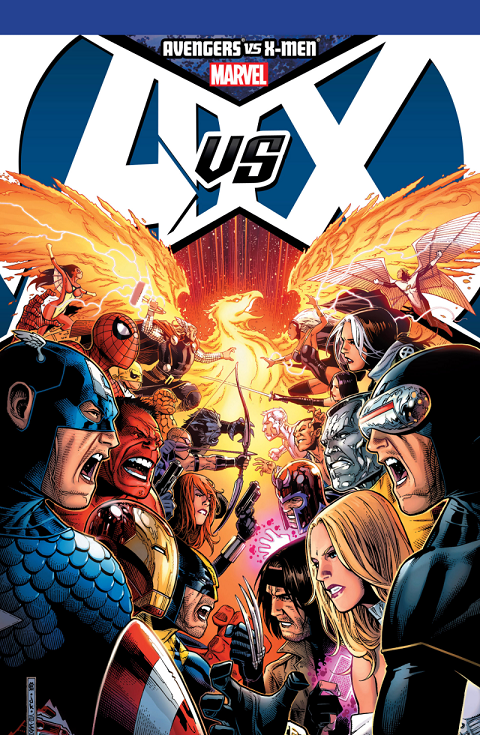
Avengers Vs X-Men by Brian Michael Bendis and Others

The only real reason anyone should read Avengers vs X-Men is because of the fact that the 'repercussions of the storyline resulted in the new status quo of the Marvel Universe presented in the company's Marvel NOW! relaunch initiative'. It birthed a new line-up of X-titles based on the aftermath of said major event. Heck, I'm currently reading one now (Uncanny Avengers) which is shitty, by the way, and almost rivals X-Men Volume IV which I quit halfway through. I'm quitting Rick Remeder's UA sooner rather than later as well. Sorry, Rick. It seems like not everything you write can be like your new ongoing series Low (which I like, so stick with that instead). ANYWAY, back to AVX.

This mammoth collection clocked close to nine hundred pages (my soft copy has at least 798, and the one I use for updates in Goodreads has eight-hundred-something). Regardless, this volume contains the centerpiece tale divided in three winding acts (with twelve or more issues, I honestly did not count) like a play, which ran for at least four hundred pages. The rest were just tie-ins concerning the varied fights among Avengers and X-Men which basically played out like cheesy pro-wrestling matches--even the writers themselves admit there was no plot--just a bunch of decent, noble superheroes tearing each other new assholes. I did not bother reading that part of this collection because FUCK...THAT. 

If I want to watch pro-wrestling, I'll watch pro-wrestling and not read it, for chrissake. That sort of choreographed fighting matches are best experienced in the live-action medium, thanks very much. With that said, my review will focus on the centerpiece narrative minus tie-ins, and so my rating will solely be based from that.


Written by Brian Michael Bendis, Matt Fraction, Jason Aaron, Ed Brubaker , and illustrated by Jonathan Hickman, John Romita, Jr., and Olivier Coipel Adam Kubert, the colossal clusterfuck extravaganza deemed Avengers vs. X-Men had three major conflicts at its very core. With the exception of the stupid tie-ins, it's actually riveting examination of character arcs concerning a pair of men and women respectively--Captain America and Cyclops; Scarlet Witch and Hope Summers. 

As for the central conflicts themselves, I enumerated and summarized them as the following below:

  • The Coming of the Phoenix Force and its ramifications
  • Hope's failure to be its receptacle and her journey to reclaim it
  • Cyclops and Captain America's clash of leadership and objectives


The rest are either interrelated or consequential of these big three, in my opinion. As a concept, it's pretty interesting and definitely an enjoyable thing to watch unfold. The Avengers--world's heralded group of the mightiest heroes--and the X-Men--world's persecuted group of the most outcast misfits--finally reach a grand breaking point. For a time, these separate superhero factions have managed to live and serve in mutual co-existence, albeit the underlying tension and personal politics that define their working relationships. But since mutant and Avenger member Wanda Maximoff (Scarlet Witch) decimated mutant population, the X-Men became more marginalized than ever, just when you thought it was not possible. A chain of events followed where readers get to see Scott Summers, formerly known as the Golden Boy and favored son of Charles Xavier, be pushed to his limits until he was committing small atrocities in the name of the survival of mutantkind. 

Raised in the beliefs of a mentor who preached pacifist ways as oppose to violence, Cyclops unfortunately started leaning more on Magneto's philosophy until he was marching into a crusade that spits in the face of the values he was supposed to uphold as an X-Man. It was a gritty character development that no one saw coming until it was already walking that tight rope. With his desperation to save mutantkind, Scott Summers nearly destroys everything that wasn't a part of his beloved race.


Some would say his war against the Avengers was an overreaction; others would say it was perfectly justified. Captain America--in spite of it being unintentional--had neglected to take account mutantkind in his American dream of truth, equality and justice. He had cast them out as a separate race who seem secondary to the humans. In Scott's eyes, it was an unforgivable act of both ignorance and arrogance. The Avengers have played as unaware enablers, shielding humanity from the worst of mutantkind instead of helping the X-Men educate humans to the best of their race. They worked together as teams multiple times, but it was out of tolerance than real camaraderie and friendship. And Scott finally has had enough of Captain America's self-righteousness and condescension. It was time for extreme measures. 

Can we really blame Scott for the steps he took to secure liberty and guarantee mutantkind's survival? After all, this was the same boy who was chosen and tasked by Professor X himself to lead his kind, one who is crippled by survivor's guilt at a tender age and who always felt the need to restrain his powers as oppose to fully embracing them. This boy grew up to be a man who lost his first love to an absolute power beyond anyone's comprehension; a man who had to hold together a fractured race of confused, terrified and powerful misfits whom human society continued to hunt down and kill; a man whom several circumstances with stakes against his favor kept pushing to a corner to until he finally pushed back. Avengers vs X-Men tells the story of Scott Summer's fall from grace, that horrific moment in his life when he was determined to accept the coming of the Phoenix Force to Earth, and the role that mutant messiah Hope had to play in all this, as the miracle he had been wishing for since the decimation. This was a man who had everything he believed in tested, broken down and twisted into something even he himself could no longer recognize. And so he was ready to bet it all and let the rebirth power of the Phoenix take course.


The twist, however, came when the Phoenix refused Hope. The mutant messiah who was born and trained for greatness has flinched at the last second when she was supposed to receive the Phoenix, and in return the Phoenix claimed Scott Summers, Emma Frost, Namor, Colossus and Illyana Rasputin. The Phoenix Five began fixing the world's problems using their powers but they are ticking bombs that could explode any moment and so the Avengers have to put a stop to all this madness. 

One by one, the Phoenix Five are defeated until only Scott and Emma were left. As it turns out, the more their numbers decrease, the residual power of the Phoenix gets absorbed by the ones left, making the two lovers the most powerful beings in the universe. The only two people who can dissuade them are Hope and Wanda; the former was the rightful receptor of the Phoenix while the latter is the mutant who destroyed her own kind. It would seem even the Phoenix recognizes Wanda's powers as a destroyer, which was why Scott and Emma were wary of her.


Meanwhile, Scott continues to justify his actions to his mentor and surrogate father: 


And even to himself, and the ghost of his beloved late Jean:


The climactic moment took place when Charles Xavier tried one last time to get through Scott who had taken Emma out of the equation and absorbed the Phoenix for himself--turning him into the Dark Phoenix second incarnate. All is fucked when Scott killed the man in a symbolic gesture that was just as intimate and devastating:


After the commotion settles, Hope stepped in and claimed the Phoenix as her own. As soon as she was possessed by it, she began repairing all the global damage the Phoenix Five previously inflicted due to their fights with the Avengers. Hours ago, she and Captain America had a heartfelt conversation where she asked him to trust her because she vowed she will do things differently. He did, but now that she had the Phoenix burning inside her, filling her with the glow of creation, Hope refused to let it go. She was meant to be the mutant messiah after all. She had to become the Phoenix for good and never relinquish its hold.


But then Wanda the Scarlet Witch convinced her otherwise; this was a woman who had the power to bend and re-create realities at will, and she had used it to fracture mutantkind just to punish her father Magneto. She will now have to forever live with that atrocity for the rest of her life. She cautioned the young Hope to not commit the same mistake, assuring her that if Hope was strong enough to let that kind of monstrous power in, then she is strong enough to let it go. 


Across the world, thousands of mutants were being born again. It was the final gift of the Phoenix Force as Wanda and Hope relinquish it back to the cosmos where it belonged. Lives and relationships were never the same again. Captain America knew he had to establish a real working relationship between Avengers and the X-Men; Scott Summers was imprisoned and labeled a terrorist but was fine with it because his wish was granted; Wolverine and the rest of the X-Men bury Xavier together and mourn his passing, as he decided to open a new mutant school named after Jean Grey; and a new line-up of X-titles were born.


This was a story meant to be read for posterity. It was unevenly paced, often alternating between being rushed or dragging, but had enough moments of great character conflicts to still be a riveting read for an X-Men fan who enjoys exploring the complicated interplay among its heroes and villains. Taking out the tie-ins out of consideration, Avengers vs. X-Men is an important work in itself in spite of its glaring flaws and a few plot holes here and there.

RECOMMENDED: 7/10